
Pressure-treated, cedar, redwood and hardwood
Wood Deck Building in Tempe, AZ
Real wood stays cooler underfoot than most composite, as long as it is sealed and kept up in the desert sun.
- Free on-site estimates
- Written, itemized quotes before work starts
- Permit and HOA paperwork planned into the schedule
Wood Decks for Dry Heat
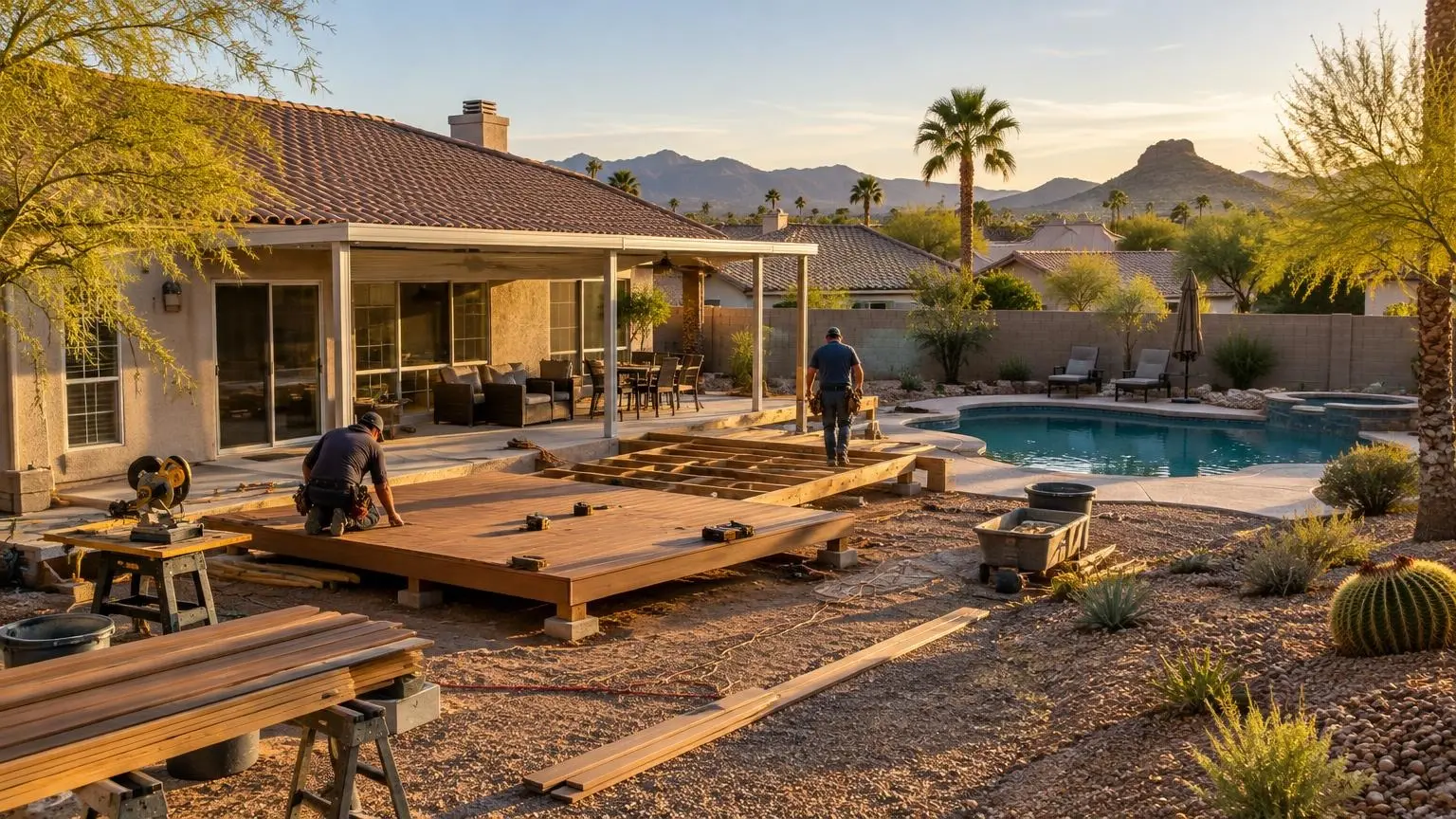
Wood deck building still makes sense in Tempe. Wood usually costs less up front than composite, it can be repaired board by board, and many woods stay cooler underfoot than composite in full sun. In one seller's outdoor test, teak measured about 120°F while many composite boards reached 140°F or more. The price of wood in the desert is upkeep: dry air and UV pull moisture and color out of unprotected boards quickly, so a finish schedule is part of every wood deck we build.
Choosing the wood
- Pressure-treated pine: the lowest cost and the usual choice for framing. It needs a penetrating stain or sealer soon after it dries out.
- Cedar: lighter in weight, naturally resistant to decay, with a warm color that fades to gray without a UV-blocking finish.
- Redwood: stable and handsome, at a higher price, and it also needs UV protection to hold its color.
- Tropical hardwoods such as ipe: very dense and long-lasting, but expensive, heavy, and harder to cut and fasten.
What desert sun does to wood
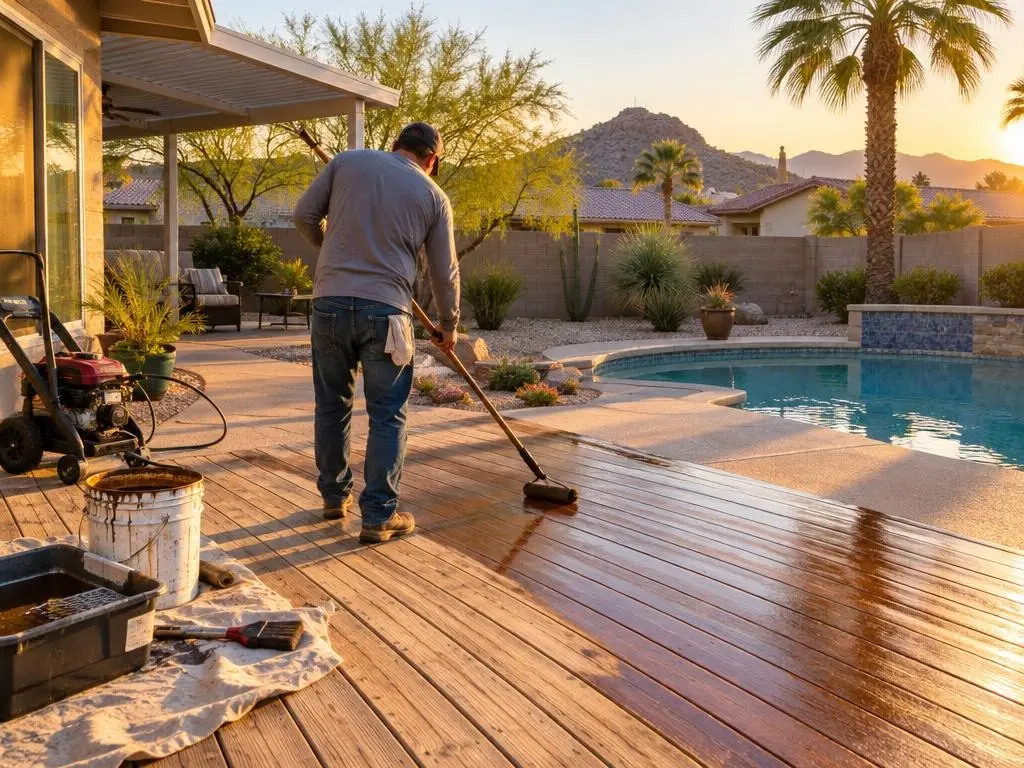
UV breaks down the surface fibers, which turns wood gray and rough. Daily swings between hot days and cooler nights cause boards to expand and shrink, which opens checks and loosens fasteners over time. Monsoon downpours after months of dry weather soak into unsealed wood and dry out fast again. A good penetrating finish slows all of that. Angi notes that a deck stain generally lasts two to five years and that dense hardwood may need restaining yearly.
Ground-level decks over Tempe soil
Many Tempe decks are low platforms that replace a section of gravel or extend a small slab patio. Low decks have less airflow underneath, so we use ground-contact rated lumber where the frame sits close to the soil, keep the frame off the dirt on footings or blocks, and slope the ground so monsoon rain does not collect under the deck.
Fasteners and hardware
Pressure-treated lumber is corrosive to plain steel, so connectors and screws need to be rated for treated wood. We use structural connectors at beams and joists and screws instead of nails for deck boards, which hold better as the wood moves through Tempe's daily heat cycles.
When wood is the better pick
Wood fits best when the budget is tight, when the deck is shaded for much of the day, when you want a natural look that matches older homes, or when you plan to refinish regularly. If you would rather never stain again, composite is usually the better fit, and we will tell you that at the estimate.
What This Covers
A wood deck project includes the structure, the boards and the first protective finish.
Pressure-treated decks
Treated pine framing and decking, the most budget-friendly wood option.
Cedar and redwood decks
Naturally decay-resistant softwoods for the deck surface, over a treated frame.
Hardwood decks
Ipe and other dense tropical woods for a long-lasting, very hard surface.
First finish
A penetrating stain or sealer applied once new lumber is ready to take it.
Typical Wood Deck Costs
| Item | Published national range |
|---|---|
| Pressure-treated, installed (Fixr) | $15 to $25 per sq ft |
| Cedar, installed (Fixr) | $19 to $29 per sq ft |
| Redwood, installed (Fixr) | $27 to $38 per sq ft |
| Ipe, installed (Fixr) | $30 to $55 per sq ft |
| Pressure-treated boards, materials only (Angi 2026) | $2 to $5 per sq ft |
| Deck building overall (Angi 2026) | $30 to $60 per sq ft |
Published national ranges, not Tempe-specific prices. Size, height, access, materials and permits change the total. Your written estimate is the price.
How It Works
1. Site visit
We measure, check soil and drainage, and talk through wood species and finish.
2. Quote and drawing
An itemized written quote and a framing drawing for review.
3. Build
Footings, treated framing and decking, fastened with hardware rated for treated wood.
4. Finish plan
We apply or schedule the first finish and explain how often to recoat.
Wood Deck Building Questions
Is a wood deck a good idea in Phoenix-area heat?
Yes, if you keep it sealed. Wood often stays cooler underfoot than composite, but dry heat and UV gray and check unprotected boards fast. Plan on refinishing every few years.
What is the cheapest wood for a deck?
Pressure-treated pine. Fixr lists it at about $15 to $25 per square foot installed, compared with $19 to $29 for cedar and $27 to $38 for redwood.
How long does a wood deck last in Arizona?
That depends on the wood, how well it is built and how consistently it is finished. Low rainfall helps with rot, but UV and heat are hard on the surface, so maintenance makes the difference.
When can a new pressure-treated deck be stained?
Treated lumber has to dry before it will absorb stain. In Tempe's dry air that can happen faster than in humid climates. A simple water-drop test shows when the wood is ready: if water soaks in, the wood can take stain.
Wood Deck Building Service Areas
- Deck Builders in Tempe, AZ
- Deck Builders in Chandler, AZ
- Deck Builders in Mesa, AZ
- Deck Builders in Gilbert, AZ
- Deck Builders in Scottsdale, AZ
- Deck Builders in Phoenix, AZ
- Deck Builders in Ahwatukee, AZ
- Deck Builders in Guadalupe, AZ
- Deck Builders in Paradise Valley, AZ
- Deck Builders in Fountain Hills, AZ
- Deck Builders in Queen Creek, AZ
- Deck Builders in San Tan Valley, AZ
- Deck Builders in Glendale, AZ
- Deck Builders in Peoria, AZ
- Deck Builders in Surprise, AZ
- Deck Builders in Goodyear, AZ
- Deck Builders in Avondale, AZ
- Deck Builders in Laveen, AZ
- Deck Builders in Apache Junction, AZ
- Deck Builders in Gold Canyon, AZ
- Deck Builders in Sun Lakes, AZ
- Deck Builders in Cave Creek, AZ
- Deck Builders in Anthem, AZ
- Deck Builders in Litchfield Park, AZ
Get a Wood Deck Building Estimate
Free estimates for wood decks in Tempe.